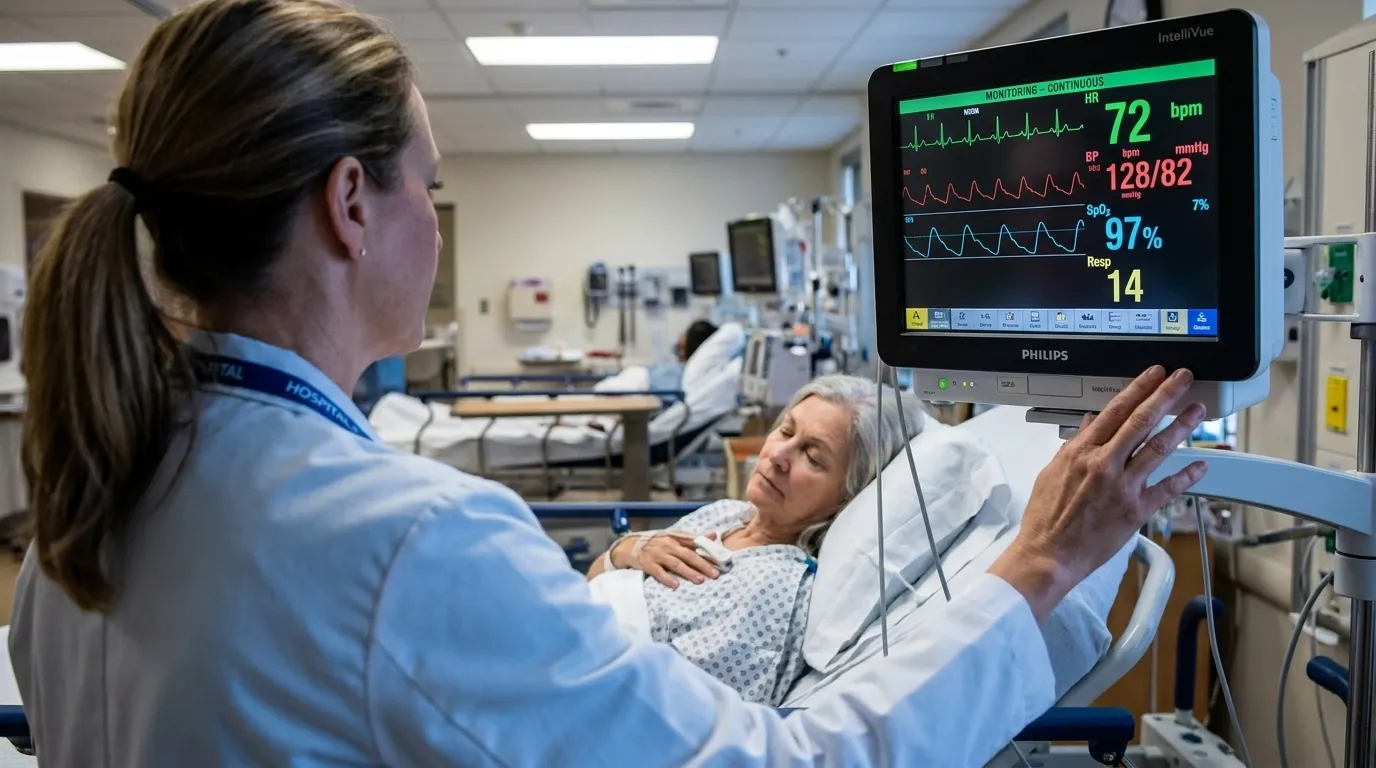
In twenty-two years on a cardiac rehabilitation unit, I have learned exactly one thing about heart attacks that almost nobody outside of cardiology fully understands.
Most of the patients I help recover did not see it coming.
They had been to their doctor. They had been told their numbers were "a little high" or "borderline" or "we will keep an eye on it." They had walked out of the appointment carrying a vague sense of unease and an even vaguer plan to do something about it.
And then, six months later, sometimes eighteen months later, they wound up on my unit.
What I have watched, in the past two years specifically, is that pattern starting to break.
The patients arriving on my unit lately, especially the women between fifty and seventy, are arriving with something on their wrists they did not have five years ago. They are arriving with a small, simple, inexpensive wrist tracker that has been telling them their numbers every day for months. They are arriving with charts of their resting heart rate. They are arriving with patterns. They are arriving with information.
And, increasingly, they are arriving early. Not as patients in crisis, but as patients who saw something on their wrist that worried them, called their cardiologist, and got an appointment moved up by three weeks.
I want to tell you about what they are wearing. And why I have started telling my own patients to wear one too.
Why Most Heart Events Happen In The 86,400 Heartbeats A Day Your Doctor Never Sees
Here is the math that almost no one says out loud.
The American Heart Association estimates that the average resting heart rate is around sixty beats per minute. Multiplied across twenty-four hours, that comes to approximately 86,400 heartbeats every single day. Across the year, it is just over thirty-one million.
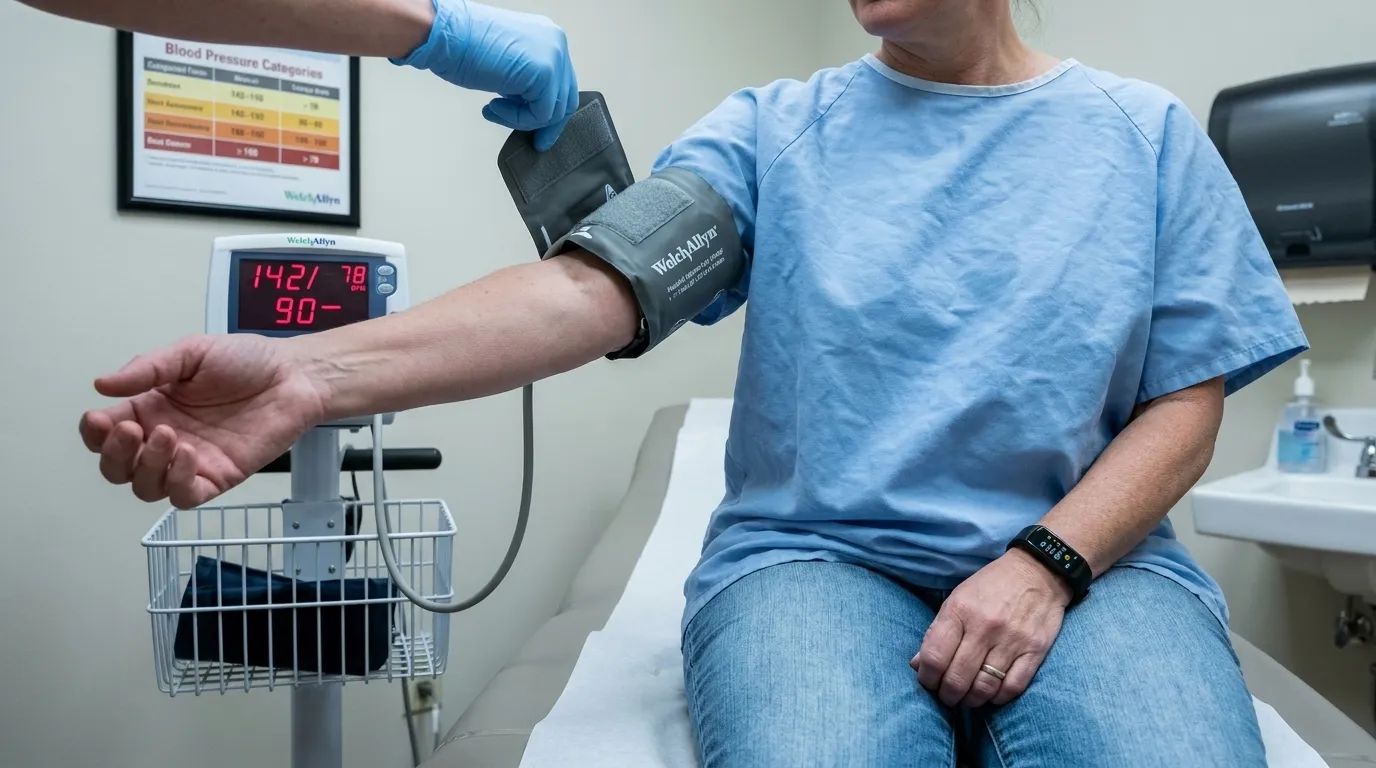
Of those thirty-one million heartbeats, your doctor will hear, at most, sixty of them — during a single annual physical — through a stethoscope, while you are sitting still in a fluorescent-lit office, in clothes that are slightly too tight, after you have just sat in a waiting room for twenty minutes.
The other thirty million, nine hundred ninety-nine thousand, nine hundred forty heartbeats happen while you are sleeping, walking up the stairs, having a difficult conversation with your husband, getting bad news on the phone, lifting groceries, climbing into bed at the end of a long day, or sitting in your kitchen at five in the morning unable to sleep.
Those are the heartbeats that matter.
In my practice, I sit with patients in the weeks after a cardiac event and ask them what they wished they had known. Almost every one of them says the same thing. They wished they had known what their heart was actually doing in those thirty million unobserved heartbeats. They wished they had a record. They wished they had patterns. They wished they had numbers their doctor could have looked at six months ago.
For most of medical history, that information was simply unavailable to ordinary people. Twenty-four-hour Holter monitors existed but had to be prescribed, cost hundreds of dollars, and were uncomfortable to wear. Hospital telemetry only happened if you were already admitted. The technology to track your own vitals continuously, on your own wrist, simply did not exist outside of a clinical setting.
That changed in the last five years. And in the last two years specifically, the price has dropped to where the average American can afford to wear one every day.
What Cardiac Nurses Are Now Quietly Telling Their Patients To Wear
Continuous heart rate monitoring used to belong to a hospital. The monitors were the size of a microwave, the leads ran across your chest, and the only people wearing them were patients in cardiac care units, athletes in clinical trials, or people undergoing prescribed Holter studies that had to be coded and billed through insurance.
The optical sensor changed that.
Photoplethysmography, the technical name, has been used in hospital pulse oximeters since the 1980s. A small green light shines through the skin. A sensor measures how much light is reflected back with each pulse. The math gives a precise heart rate reading. The technology is the same one used in Apple Watch, Fitbit, hospital pulse oximeters in every emergency room in the country, and the small wrist tracker my patients have started showing me when they come into clinic.
In the past five years, the cost of that sensor has dropped by more than ninety percent. What was a hundred-and-fifty-dollar component in 2018 is now a five-dollar one. The wrist trackers built around it have followed the same curve.
Cardiac nurses across the United States have been watching this happen. We have watched the first wave of expensive smartwatches arrive — the Apple Watches and Fitbits that cost three hundred dollars and require an iPhone to use. We have watched a great many of our patients, particularly those over fifty-five, look at those devices and decide they are not for them. They do not want a smartwatch. They do not want notifications. They do not want apps. They want their numbers.
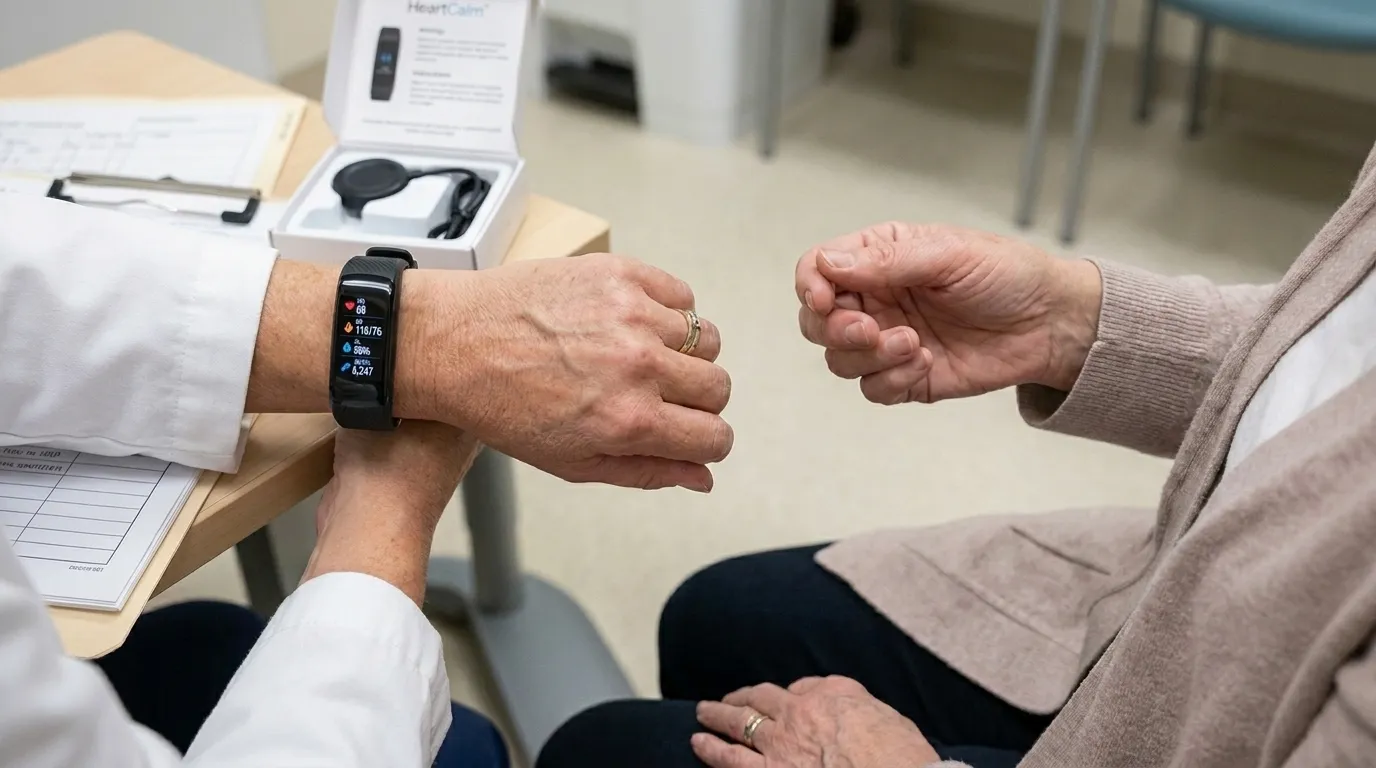
Eighteen months ago, my patients began bringing in a different kind of wrist tracker. It was small. It cost less than fifty dollars. It did not require a smartphone or an app. It showed four numbers on a small color screen — heart rate, blood pressure trend, blood oxygen, and step count — and it did so continuously, all day, every day. They were reading the numbers off their wrist and writing them down in small notebooks they brought to their cardiology appointments.
The brand most of them were arriving with is called HeartCalm.
The Device Itself And Why It Is Different From Every Smartwatch On The Market
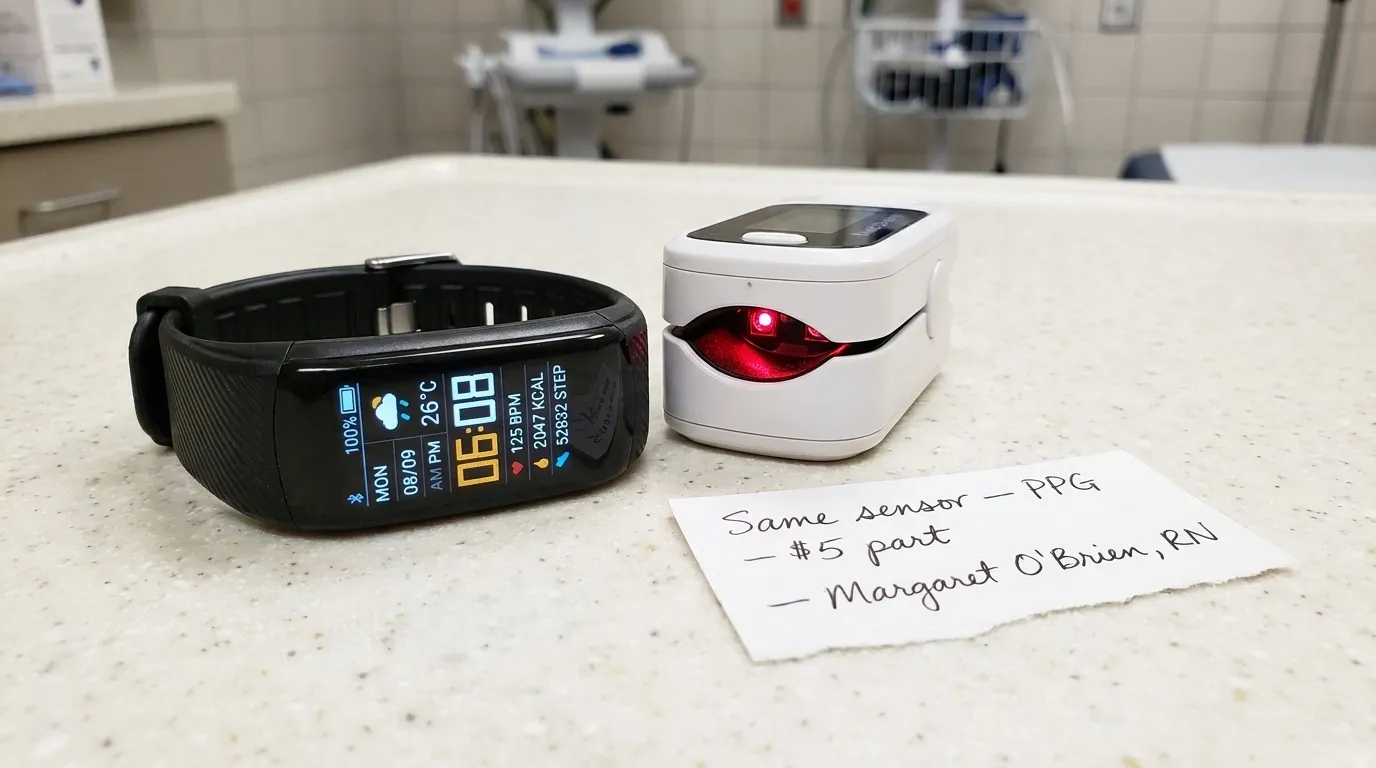
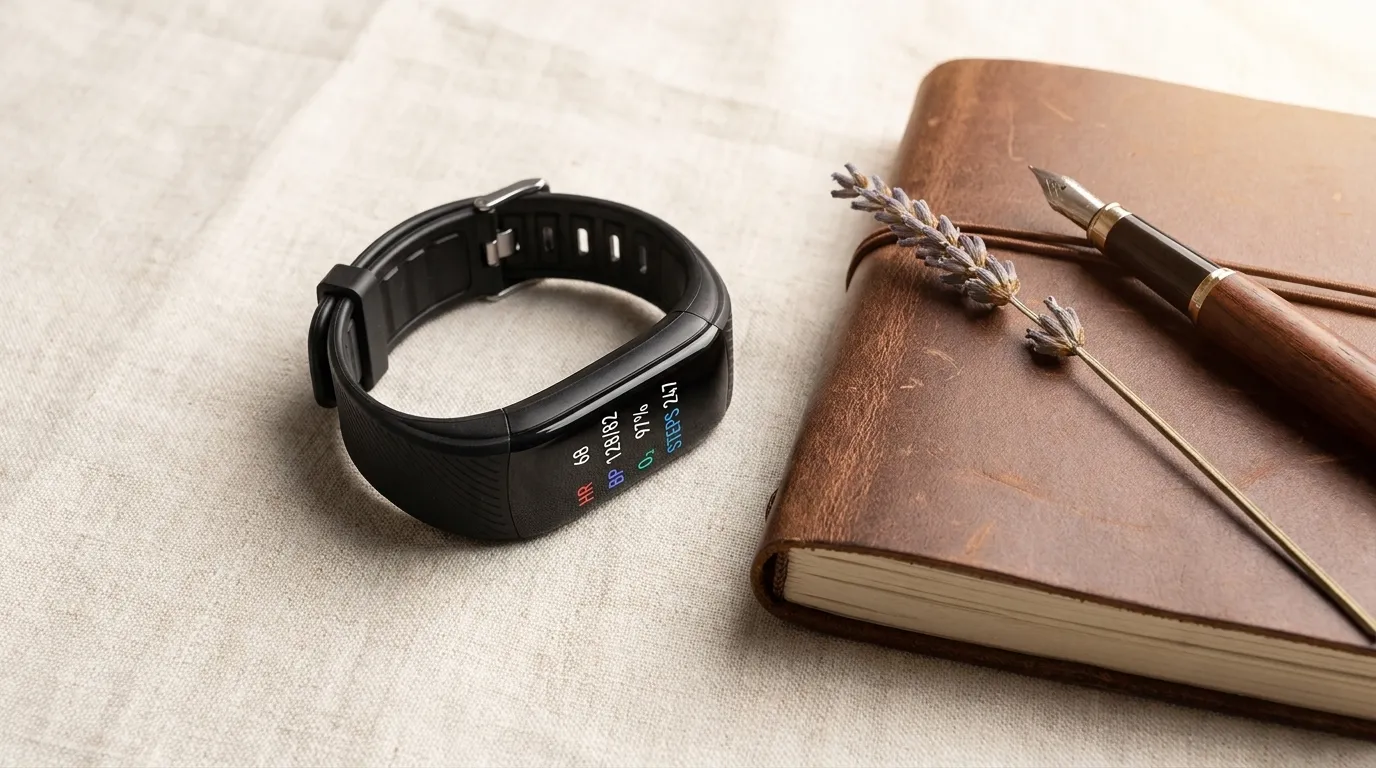
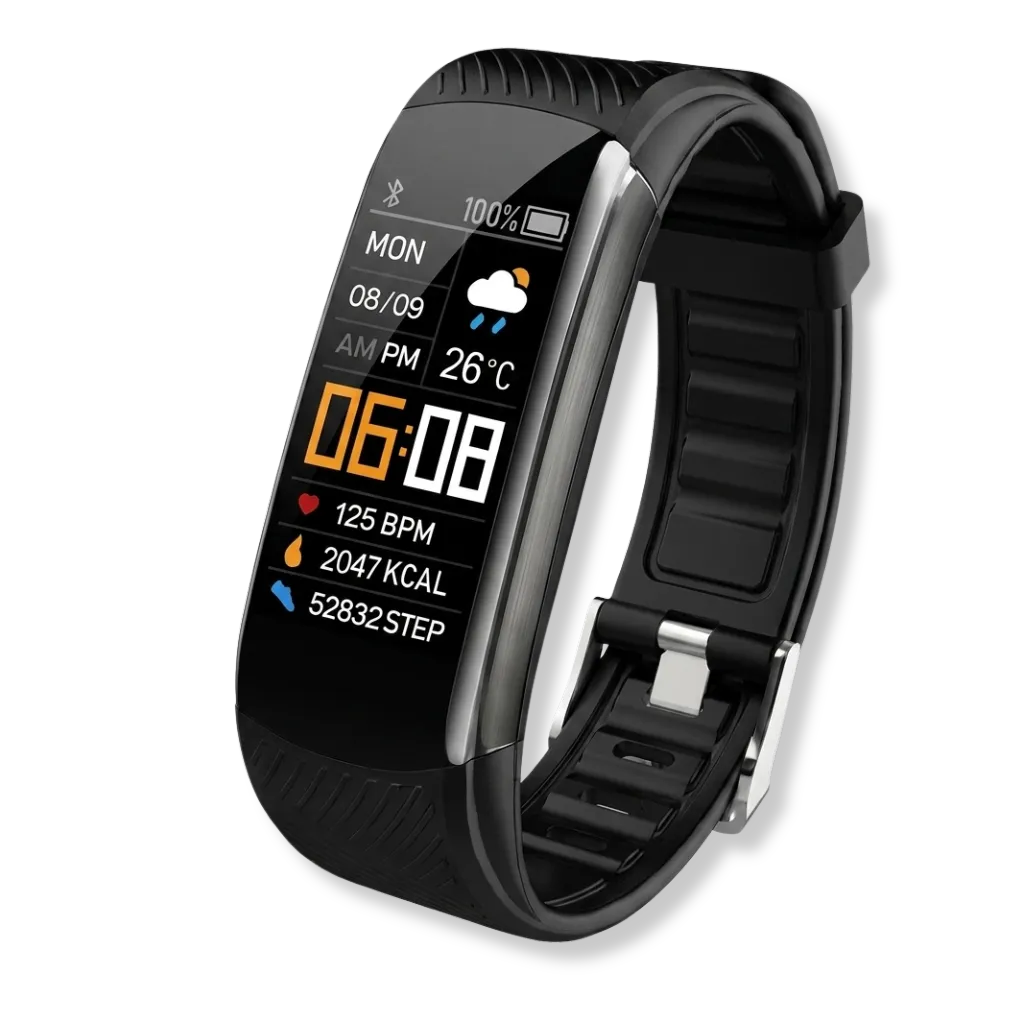
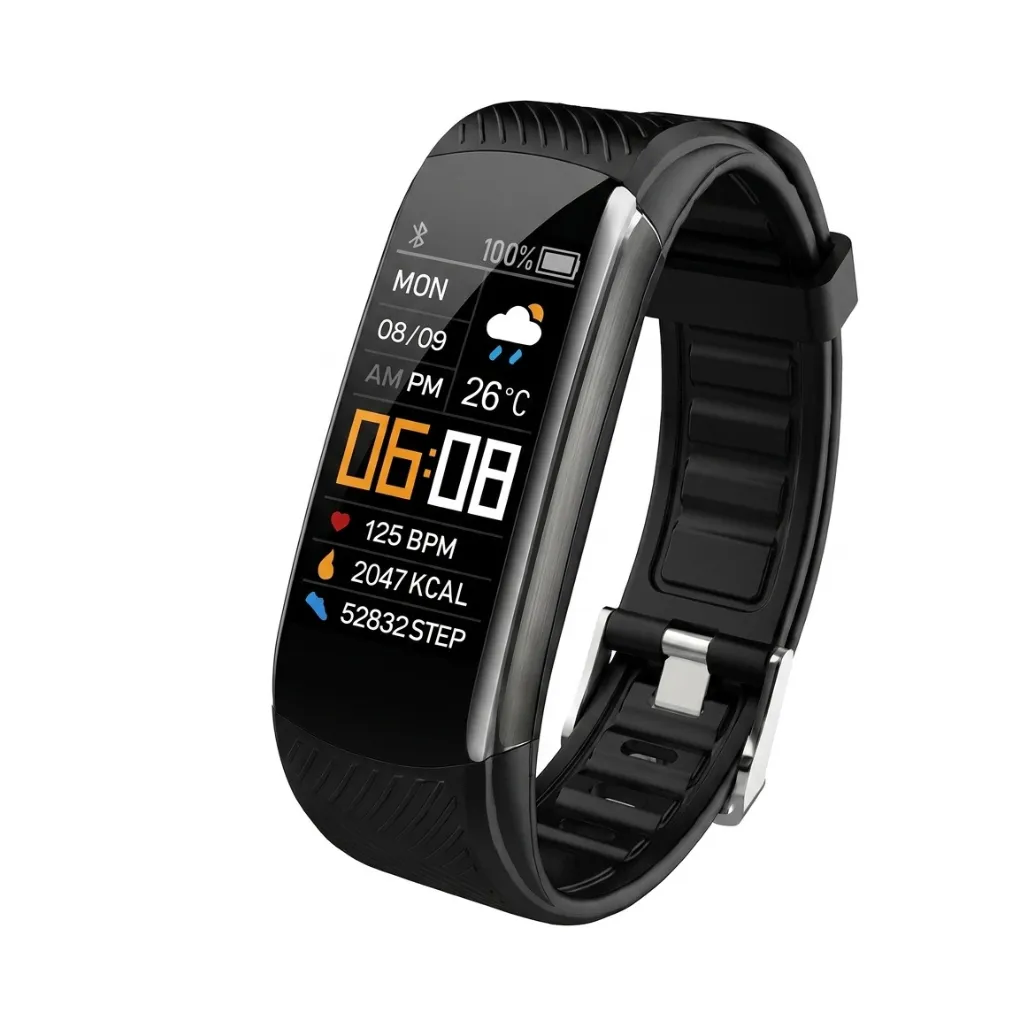
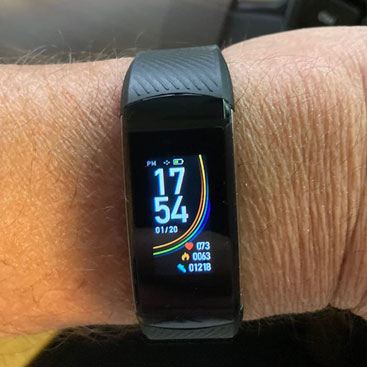
It is small. Lightweight. About the size of a fitness band, with a thin black silicone strap and a small color screen on the inside of your wrist.
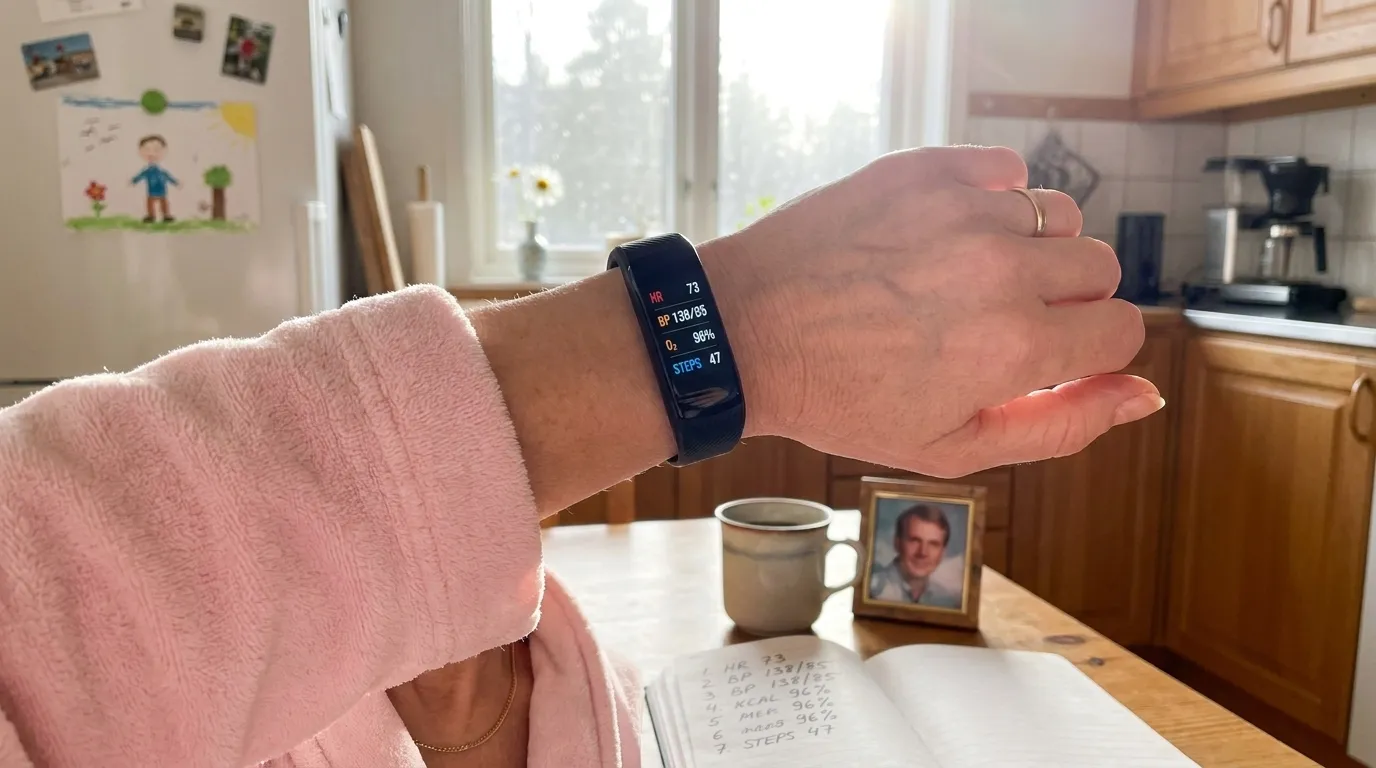
The screen shows four numbers. Your heart rate, in beats per minute. Your blood pressure trend, displayed as a simple high-low pattern over the past twenty-four hours. Your blood oxygen, as a percentage. And your step count for the day. That is what you see when you look at your wrist. That is everything.
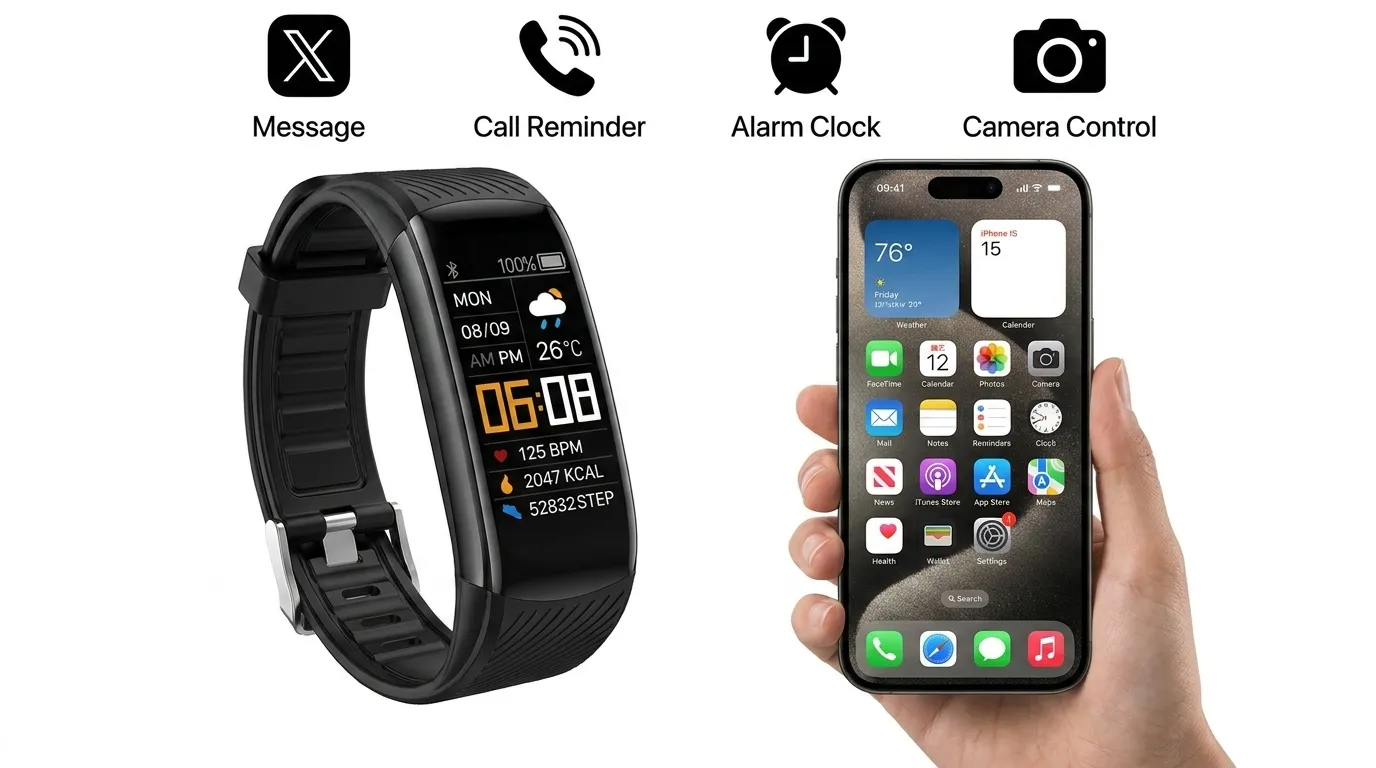
There is no app. There are no notifications. There is no iPhone required. There are no monthly fees. There are no software updates. The device works as a standalone piece of equipment — the way a thermometer works, the way a bathroom scale works, the way a home blood pressure cuff works.
You charge it once a week with the small magnetic charger that comes in the box. The battery lasts seven days on a single charge. You wear it twenty-four hours a day, including in the shower (it is waterproof to a meaningful depth), and you read the numbers off your wrist whenever you want to.
What separates HeartCalm from every smartwatch on the market — Apple Watch, Fitbit, Garmin, Samsung — is that it does not try to be a smartwatch. The patients in my unit who have tried Apple Watches almost universally describe the same problem: too many features, too many notifications, too much pressure to engage with apps and software they did not want in the first place. They wanted to know their heart rate. The smartwatch wanted them to close rings, share workouts, and respond to text messages on a quarter-inch screen.
HeartCalm is the opposite of that approach. It does one job. It shows you your numbers. It does not nag you, ping you, or try to integrate with anything. The patients I see in cardiac rehab — the people for whom this matters most — describe the same small ritual on quiet mornings. Sitting at the kitchen table with the first cup of coffee. Looking at the inside of the wrist. Reading the four numbers. Writing them in a small notebook if it has been a tense week. Going about the day.
That ritual is the entire point. The numbers are the same numbers your doctor would take in an appointment. The difference is, you have them every day, not once a year.
Frequently Asked Questions From Patients And Readers
How accurate is HeartCalm compared to a doctor's office?
For heart rate, HeartCalm uses the same optical sensor technology that has been clinically validated since the 1990s and that is built into hospital pulse oximeters in every emergency room in the country. The accuracy is comparable to what a nurse would measure with a finger pulse oximeter at a clinic.
For blood pressure, HeartCalm tracks trends and patterns over time rather than giving you a precise systolic/diastolic reading. Trend information is, in my professional opinion, what most cardiologists actually want to see — a single BP reading at a single appointment tells your doctor very little. A thirty-day trend tells them everything.
Do I need a smartphone or an app to use it?
No. HeartCalm works as a standalone device. You read the four numbers — heart rate, blood pressure trend, blood oxygen, step count — directly off the small color screen on your wrist. There is no iPhone required, no Bluetooth setup, no monthly fees, no software updates.
If you want to share your numbers with your doctor, you read them off the screen and write them down — the same way you would with any home health device. Most of my patients use a small notebook they keep beside the kitchen table.
How is this different from an Apple Watch or Fitbit?
Apple Watch and Fitbit are smartwatches. They are designed for users who want apps, notifications, fitness coaching, and full smartphone integration. They cost between three hundred and seven hundred dollars and require an iPhone or Android phone to function.
HeartCalm is the opposite of that approach. It is built for adults — particularly those over fifty-five — who want their heart rate, blood pressure trend, and blood oxygen read off their wrist. No more, no less. The patients in my unit who chose HeartCalm over Apple Watch describe the same reason: they wanted simplicity, not another screen to manage.
Will it diagnose a heart attack or replace my doctor?
No, and to be very clear: HeartCalm is not a medical device, does not diagnose any condition, and does not replace your doctor or your cardiologist. It is a wellness device that gives you information about your own vitals — the way a home thermometer gives you information about your temperature, or a bathroom scale gives you information about your weight.
What patients consistently tell me HeartCalm does well is help them have better conversations with their doctors. They arrive at appointments with thirty days of resting heart rate data and BP trend patterns. Their cardiologists have something concrete to work with rather than a single in-office reading.
Is it comfortable to wear all day, including while sleeping?
The strap is soft black silicone and the device itself is lightweight — most patients describe forgetting they are wearing it within the first three or four days. It is waterproof to a meaningful depth, so you can shower, wash dishes, and even swim in it.
Continuous wear, including overnight, is what makes the data useful. Resting heart rate during sleep is one of the most clinically valuable numbers a person can track over time, and you cannot capture it without wearing the device while you sleep.
What is the price and is there a guarantee?
HeartCalm is currently $39 during this introductory release, with free shipping inside the United States. There are no monthly fees, no subscription charges, and no app fees. The price is a one-time purchase.
The 90-day money-back guarantee is offered without conditions. Wear it for ninety full days. If the device does not help you the way the patients in this article describe, return it for a full refund. No paperwork, no questions, no waiting.
What Readers Are Saying — Real Owners In Their Own Words
"My father had his first heart attack at fifty-eight. He survived. His second heart attack, at sixty-two, he did not. I am fifty-nine years old. My doctor told me last year that my blood pressure was 'a little high' and to 'come back in six months.' I did not come back in six months. I came back in three weeks because I had three weeks of HeartCalm data showing I was running consistently in the 145-over-95 range, not the 130-over-85 range my doctor had measured in office. My cardiologist looked at the data, started me on lisinopril that day, and added a second medication six weeks later. I am sleeping better. The numbers are coming down. I am not going to be my father."
"I am sixty-two years old. I had a small stent put in two years ago after some chest pain that turned out to be more serious than my GP thought. My cardiologist suggested I get a wrist tracker. I went to look at Apple Watches and walked out of the Apple Store overwhelmed — three hundred dollars, an iPhone I do not own, monthly subscriptions, more apps than I needed for any reason. My daughter found HeartCalm online for thirty-nine dollars. It does the four things I needed it to do. Heart rate. Blood pressure trend. Oxygen. Steps. That is all I look at every morning. My cardiologist is happy with my numbers. I do not need anything else."
"I am seventy-one. My husband died of a heart attack in 2019 and I have not slept the same since. I had been measuring my own blood pressure with a cuff for years but it was once a day and I was not sure what to do with the numbers. HeartCalm gives me my pulse and BP trend continuously, and the screen is large enough that my arthritic eyes can read it without glasses. The strap is light. I forget I am wearing it. I keep a small notebook on my kitchen table and write the numbers in the morning before my coffee. My niece, who is a nurse, looked at the notebook last month and said the patterns make sense. I sleep a little better knowing I am paying attention."
"My friend Carol died last spring. She was fifty-five. She felt fine on a Tuesday and on Wednesday morning her husband found her on the bathroom floor. The autopsy said it was a heart attack. Carol and I had been hiking together for fifteen years. After she died I sat in my kitchen and tried to figure out what to do. I did not want to become hysterical and check my pulse a hundred times a day. I wanted to know my numbers and then go about my life. HeartCalm is exactly that. I look at my wrist twice a day. I write the numbers down. I have a yearly physical scheduled now and I am bringing the notebook. I am taking myself seriously for the first time in my life."
What This Means For You
I have worked in cardiac rehabilitation for twenty-two years. In that time, I have stood at the bedside of more than a thousand patients in the days and weeks after a cardiac event — patients in their fifties, in their sixties, in their seventies, who had walked out of an annual physical with vague reassurances and ended up in our unit anywhere from six months to two years later.
The single most common sentence I hear from those patients is some version of the same one. I wish I had been paying attention sooner.
For most of my career, paying attention was a hard thing to ask of a patient. The tools were either expensive, complicated, or inaccessible. A home blood pressure cuff was static — one number, once a day, easy to forget. A 24-hour Holter monitor required a prescription, an insurance code, and a two-week wait. The first wave of consumer wearables — Apple Watch, Fitbit — required a smartphone, monthly subscriptions, and a comfort with technology that many of my patients over fifty-five simply did not have.
What has changed in the past two years is that there is now a small, simple, inexpensive wrist tracker that does the four things my patients actually need it to do — without trying to do anything else. HeartCalm is not a smartwatch. It is not trying to compete with Apple Watch on features. It does not run apps. It does not require an iPhone. It costs thirty-nine dollars one time, with no monthly fees, no subscriptions, and no software to install. And it gives my patients something they did not have before: a continuous record of what their heart is actually doing, every day, that they can read off their own wrist and bring to their cardiologist.
If you are over fifty, if you have a parent or sibling who has had a heart attack or stroke, if your doctor has used the words borderline or a little high at any of your last three appointments — you are exactly the person I am writing this for. The numbers your doctor sees once a year are the easy ones. The numbers HeartCalm shows you on your wrist every morning are the ones that matter.
HeartCalm™ is currently available for $39 during this introductory release, with free shipping inside the United States, no monthly fees, no subscription charges, and a 90-day money-back guarantee. If it does not help you the way it has helped the patients in this article, it can be returned for a complete refund.
The patients who arrive on my unit too late are the ones who waited. The patients who arrive early are the ones who started paying attention. Thirty-nine dollars is a small price to be the second kind of patient.
A note from the editor: HeartCalm™ is currently available at the introductory price of $39 with free US shipping, no monthly fees or subscriptions, and a 90-day money-back guarantee. Available while inventory lasts.

As of today's date — Inventory for the introductory release is limited. To order HeartCalm™ at 70% OFF + FREE US SHIPPING, please visit the official site directly.
Introductory pricing — 70% OFF + FREE US SHIPPING
Note: This price is not currently available on Amazon or in retail stores.







Margaret Holloway
I lost my mother to a heart attack two years ago. She was sixty-four. The autopsy said her blood pressure had probably been quietly creeping up for a decade and nobody caught it. I am fifty-two now and I have been wearing HeartCalm for three months. My numbers are not great. But at least I know what they are. Ordering one for my sister tomorrow.
LikeReply3,84714 min